Abstract
Purpose: This study explores the mediating role of green management in the relationship between green supply chain management (GSCM) practices and firm performance among Chinese and Pakistani companies. It aims to clarify how sustainable operational strategies and environmental initiatives enhance organizational efficiency and competitiveness in emerging markets. Design/methodology/approach: Quantitative data were collected from 200 firms listed on the Chinese and Pakistani stock exchanges between 2014 and 2024, selected through purposive sampling. Statistical analyses were conducted using Python and SPSS (version 26), and structural equation modeling (SEM) was applied to examine the direct and indirect relationships among GSCM, green innovation, and firm performance. Findings: The results reveal that GSCM practices do not directly influence firm performance; however, green innovation fully mediates this relationship. Firms that integrate green management and innovation achieve higher efficiency, improved environmental compliance, and stronger competitive advantages. Originality/value: This study provides empirical evidence on the mediating effect of green innovation in the GSCM–performance nexus, particularly in the context of China and Pakistan. The findings contribute to the growing body of literature on sustainable operations and offer practical guidance for firms seeking to enhance environmental and economic performance through green management initiatives.
Keywords
Green Supply Chain Management, Firm Performance, Systems Theory, Structural Equation Modelling
1. Introduction
Environmental concerns are gaining importance in the eyes of the business community because such concerns have direct effects on organizational performance. China and Pakistan are among the leading manufacturing nations in Asia, and they both play a significant role in the region's gross domestic product, which is why it is vital to consider environmental conservation. This has led governments and other relevant stakeholders to demand that firms embrace sustainable measures in their operations. “Green innovation (GI) and green supply chain management, or GSCM," are two tactical methods that could boost output while posing little to no environmental risk
| [1] | A. Abbas, X. Luo, F. Shahzad, and M. U. Wattoo, “Optimizing organizational performance in manufacturing: The role of IT capability, green supply chain integration, and green innovation,” Journal of Cleaner Production, vol. 423, p. 138848, 2023. |
[1]
. GI, including green process management, green product R&D, and ecosystem recreation, can potentially assist firms in minimizing social costs and even enhancing performance. To support GSCM, it is necessary to communicate with the firm’s stakeholders, introduce eco-friendly products, and include the environment as the company’s supply chain consideration. Some empirical research indicates that GSCM has both positive and negative effects on the firm performance, which is why these outcomes require further examination
| [2] | A. B. Abdallah and W. S. Al-Ghwayeen, “Green supply chain management and business performance: The mediating roles of environmental and operational performances,” Business Process Management Journal, vol. 26, no. 2, pp. 489–512, 2020. |
[2]
. GSCM incorporates “environmental considerations into all aspects of supply chain management, including product design, sourcing of raw materials, manufacturing procedures, and product delivery.” SCM can be quantified using several indices that evaluate how much a corporation has reduced its environmental effect across multiple categories, each quantified by a different item variable
| [3] | J. Aguilera-Caracuel and N. Ortiz-de-Mandojana, “Green innovation and financial performance: An institutional approach,” Organization and Environment, vol. 26, no. 4, pp. 365–385, 2013. |
[3]
. The author investigates the “moderating role of green innovation in the relationship between GSCM and firm performance.” This study uses the quantitative data of Chinese and Pakistani companies from 2014 to 2024. It adopts “structural equation modeling (SEM) analysis with the help of Python and SPSS (version 26)” for the given relationships and to establish a theory-building model.
1.1. Research Questions
1) How does green management affect how “green supply chain management” affects a company's performance?
2) What is the direct impact of implementing green supply chain management (GSCM) methods on the performance of firms in various industries?
3) Which green management techniques best moderate the connection between business performance and GSCM?
4) Does “GSCM and green innovation impact firm performance?”
1.2. Hypothesis
H1: “Green supply chain management positively influences green innovation.
H2: Green innovation enhances firm performance.
H3: Green supply chain management positively influences firm performance.”
H5: External pressures positively influence “green supply chain management.”
H4: “Green innovation mediates the relationship between green supply chain management and firm performance.”
H6: “Internal environmental management positively influences green supply chain management.”
H7: “Technological capability positively influences green innovation.
H8: Stakeholder engagement positively influences green innovation.
H9: Regulatory pressure positively influences green innovation.
H10: Market demand positively influences green innovation.”
H11: Green purchasing positively influences “green supply chain management.”
H12: Environmental cooperation “positively influences green supply chain management.”
1.3. Rationale
The findings of this study contribute to the existing literature on “GSCM and green innovation by identifying” the factors that will increase efficiency in environmental management and thereby promote firm performance. Originally, GSCM meant acquiring the necessary materials, using them to create goods, and distributing them to customers while being environmentally friendly
| [4] | A. W. Alkhatib, “Fostering green innovation: The roles of big data analytics capabilities and green supply chain integration,” European Journal of Innovation Management, 2023. |
[4]
. It has been argued that the firm-level adoption of green innovation in processes and products can enhance organizational performance. This research contributes to the literature regarding how companies in China and Pakistan could use innovative practices to manage internal and external environmental pressures
| [5] | D. Agustia, T. Sawarjuwono, and W. Dianawati, “The mediating effect of environmental management accounting on green innovation–firm value relationship,” International Journal of Energy Economics and Policy, vol. 9, no. 2, pp. 299–306, 2019. |
[5]
.
1.4. Research Methodology
This research adopts a quantitative research design employing the Structural Equation Modeling (SEM) technique using Smart PLS 4.0 software to examine the factored relationships between Green Supply Chain Management (GSCM), Green Innovation (GI), and Firm Performance (FP). SEM was chosen because it allows simultaneous testing of complex relationships, including direct, indirect, and mediating effects among multiple latent variables.
The population for this study comprises publicly listed manufacturing companies in China and Pakistan, selected from their respective stock exchanges for the period 2014–2024. The study applies a purposive sampling method, focusing on firms that have consistently disclosed environmental and sustainability data in their annual reports. A total of 200 valid responses from managerial-level employees were collected through structured online questionnaires, ensuring adequate representation of both markets and sectors.
The conceptual model tests the mediating role of Green Innovation in the relationship between GSCM practices and Firm Performance. SEM facilitates the estimation of both measurement models (confirming variable validity and reliability) and structural models (testing hypothesized paths). Bootstrapping and path analysis techniques were employed to examine significance levels, R² values, and mediating effects.
The model’s latent constructs were operationalized as follows:
1). GSCM – measured through internal environmental management, green purchasing, and environmental cooperation.
2). GI – measured through technological capability, stakeholder engagement, regulatory pressure, and market demand.
3). FP – measured by financial indicators such as Return on Assets (ROA) and efficiency ratios derived from secondary data in company reports.
Control variables included firm age, firm size (log of total assets), board size, Big 4 auditor presence, and leverage ratios to mitigate potential omitted-variable bias.
Before hypothesis testing, reliability and validity checks were performed. Cronbach’s α and composite reliability values exceeded the 0.70 threshold, while average variance extracted (AVE) values were above 0.50, confirming convergent validity. Discriminant validity was verified using the Fornell–Larcker criterion. The model fit indices (SRMR < 0.08, NFI > 0.90) indicated a good model fit.
Data were gathered through an online structured survey distributed to middle and senior managers responsible for environmental and production functions. Secondary data were extracted from annual reports, sustainability disclosures, and financial databases to triangulate firm-level performance indicators. In total, 200 complete responses were retained for final analysis, while incomplete questionnaires were excluded to ensure data integrity.
Model Structure and Equations
The model includes multiple constructs and their relationships, as illustrated below:
Structural Equations
1) Green Innovation = β1 * GSCM + ε1
2) Firm Performance = β2 * Green Innovation + ε2
3) Firm Performance = β3 * GSCM + ε3
4) Green Innovation = β4 * Stakeholder Engagement + β5 * Regulatory Pressure + β6 * Market Demand + β7 * Technological Capability + ε4
5) GSCM = β8 * Internal Environmental Management + β9 * Green Purchasing + β10 * Environmental Cooperation + β11 * Resource Availability + ε5
Overall Research Model
Figure 1. Relationships between GSCM, Green Innovation, and Firm Performance.
Green Innovation Path Diagram
Figure 2. Factors Influencing Green Innovation.
GSCM Path Diagram
Figure 3. Factors Influencing GSCM.
2. Literature Review
2.1. Green Supply Chain Management
Green Supply Chain Management (GSCM) has emerged as an essential field of study among scholars and business practitioners because of the increasing concern associated with industrial pressure to mitigate environmental costs. In this respect, GSCM goes beyond the current Supply Chain Management (SCM) practices to enthuse the green initiative, which seeks to minimize environmental hoarding, trim cost marks, recover materials, and augment ecosystems
| [6] | D. Asamoah, I. N. Acquah, D. Nuertey, B. Agyei-Owusu, and C. A. Kumi, “Unpacking the role of green absorptive capacity in the relationship between green supply chain management practices and firm performance,” Benchmarking: An International Journal, 2023. |
[6]
. The measures are technological solutions where organizations add new technologies, efficient equipment with environmental consideration, supplier training, and targeted employee management
| [7] | S. Alshiqi, M. Dogan, H. S. Cerci, and A. S. Koyluoglu, “The effect of green supply chain practices on firm performance: An empirical research,” Eastern-European Journal of Enterprise Technologies, vol. 118, no. 13, 2022. |
| [8] | B. E. Awotwe-Hunny, The Effects of Green Supply Chain Management Practices on Firms’ Performance: Mediating Role of Green Innovation of Manufacturing Firms in Ghana, Doctoral Dissertation, Kwame Nkrumah University of Science and Technology, 2023. |
[7, 8]
. More often, governments are encouraging GSCM practices to maintain improved economic, environmental, operational, and social performance
| [9] | D. Chu, H. Yang, M. Lee, and S. Park, “The impact of institutional pressures on green supply chain management and firm performance: Top management roles and social capital,” Sustainability (Switzerland), vol. 9, no. 5, 2017. |
| [10] | R. J. Chiou, R. H. Chen, and F. H. Huang, “Green innovation in the automobile industry,” Industrial Management and Data Systems, vol. 114, no. 6, pp. 886–903, 2014. |
[9, 10]
. Consequently, GSCM can help manage and alleviate numerous stakeholder-related problems and external pressures and avoid claims from governments, customers, and consumers
| [11] | E. Cuglielmetti, J. Robins, and F. Mazzocchi, “Green innovation and sustainable manufacturing: Empirical evidence,” Journal of Cleaner Production, vol. 211, pp. 153–163, 2019. |
[11]
. On the other hand, there also exists a practical reason why GSCM is a strategic concern: it pushes companies to protect the environment from being passed on to the next generation, covering the life cycle of an item from its production, usage, and disposal
| [12] | D. Fei and S. Hedley, “Nature of firm performance in construction,” Journal of Construction Engineering and Management, vol. 140, no. 2, pp. 1–13, 2013. |
| [13] | R. Geng, S. A. Mansouri, and E. Aktas, “The relationship between green supply chain management and performance: A meta-analysis of empirical evidence in Asian emerging economies,” International Journal of Production Economics, vol. 183, pp. 245–258, 2019. |
[12, 13]
. However, to successfully formulate GSCM, a company has to invest a lot of effort and money and be very committed
| [14] | K. Govindan, K. Muduli, K. Devika, and A. Barve, “Investigating the influential strength of factors on adopting green supply chain management practices: An Indian mining scenario,” Resources, Conservation and Recycling, vol. 107, pp. 185–194, 2016. |
[14]
. It is one of the core activities of the circular economy since it challenges the effects of environmental degradation while integrating smooth supply chain management
| [15] | E. Handriani and R. Robiyanto, “Institutional ownership, independent board, board size, and firm performance: Evidence from Indonesia,” Contaduría y Administración, vol. 64, no. 3, p. 118, 2018. |
[15]
.
In the framework of Jordan, Abdallah and Al-Ghwayeen
et al. | [16] | I. Harymawan, “Why do firms appoint former military personnel as directors? Evidence of loan interest rate in militarily connected firms in Indonesia,” Asian Review of Accounting, vol. 26, no. 1, pp. 2–18, 2018. |
[16]
investigated the effects of GSCM on environmental performance (EP), operational performance (OP), and business performance (BP). Furthermore, the mediating roles of OP and EP on the connection between business success and GSCM were examined. Their research indicates that GSCM has a significant and advantageous effect on both EP and OP. The results also demonstrated that GSCM has a significant and positive general effect on company profitability. However, it was discovered that GSCM has a small, detrimental direct effect on business performance; GSCM positively influences business performance through EP and OP
| [16] | I. Harymawan, “Why do firms appoint former military personnel as directors? Evidence of loan interest rate in militarily connected firms in Indonesia,” Asian Review of Accounting, vol. 26, no. 1, pp. 2–18, 2018. |
[16]
.
According to Jermsittiparsert
et al. | [17] | M. Ibhagui and F. Olokoyo, “Leverage and firm performance: New evidence on the role of firm size,” North American Journal of Economics and Finance, vol. 45, pp. 57–82, 2018. |
[17]
, eco-friendly considerations have altered how businesses are conducted worldwide. The necessity for businesses to think about how their actions affect the environment has arisen due to growing environmental concerns, which has given rise to GSCM practices. This investigation aimed to determine the causes and consequences of GSCM in this regard. The study found that internal oversight of the environment and sustainable information management competency lead to environmental performance, and their results showed a strong and positive correlation between green knowledge administration abilities and internal environmental management using GSCM methodologies
| [17] | M. Ibhagui and F. Olokoyo, “Leverage and firm performance: New evidence on the role of firm size,” North American Journal of Economics and Finance, vol. 45, pp. 57–82, 2018. |
[17]
.
According to Seman
et al. | [18] | M. Junaid, Q. Zhang, and M. W. Syed, “Effects of sustainable supply chain integration on green innovation and firm performance,” Sustainable Production and Consumption, vol. 30, pp. 145–157, 2022. |
[18]
, firms are being forced to use corporate environmental practices like GSCM and green innovation due to growing public environmental awareness and the implementation of legislative measures. Therefore, both methods are required to produce a competent increase in the ecological viability of these organizations. Research on the connection between GSCM, green technological advances, and environmental efficiency is presently lacking. This research aims to present empirical data showing how GSCM and ecological technologies greatly enhance ecological durability to persuade businesses to adopt these strategies. Green innovation also enhanced sustainability efficiency, and a mediation relationship existed via green innovation between ecological sustainability and GSCM. Thus, the study verified the noteworthy impact of GSCM in enhancing green innovation within organizations and manufacturing facilities, ultimately leading to environmental enhancement. In summary, the findings advance understanding of the critical role that green technology plays in assisting businesses in enhancing organizational ecological sustainability and GSCM
| [18] | M. Junaid, Q. Zhang, and M. W. Syed, “Effects of sustainable supply chain integration on green innovation and firm performance,” Sustainable Production and Consumption, vol. 30, pp. 145–157, 2022. |
[18]
.
2.2. Green Innovation
Green Innovation (GI) refers to developing new ideas, products, or services that help firms create environmentally sustainable products, using less energy, emitting minimal pollutants, or effectively managing their waste and resources
| [19] | K. Kara and S. Edinsel, “The mediating role of green product innovation between green HRM and GSCM: Evidence from automotive industry companies in Turkey,” Supply Chain Forum: An International Journal, vol. 24, no. 4, pp. 488–509, 2023. |
[19]
. Emerging environmental issues have made green innovation mandatory for production companies seeking to improve production efficiency, enhance organizational processes, and reduce operational expenses
| [20] | M. T. Khan, M. D. Idrees, M. Rauf, A. Sami, A. Ansari, and A. Jamil, “Green supply chain management practices’ impact on operational performance with the mediation of technological innovation,” Sustainability, vol. 14, no. 6, p. 3362, 2022. |
[20]
.
The process of rethinking current products and altering the structural features of industrial operations to have a less detrimental effect on the environment is known as green innovation
| [21] | M. T. Khan, M. D. Idrees, and Y. Haider, “Industry 4.0 impacts operational and green innovation performances with the mediation of green practices,” International Journal of Productivity and Performance Management, 2023. |
[21]
. It plays a significant role in a company’s strategic planning by creating a competitive market advantage, fulfilling consumer needs, and fostering sustainability
| [22] | L. Li, S. Shan, J. Dai, W. Che, and Y. Shou, “The impact of green supply chain management on green innovation: A meta-analysis from the inter-organizational learning perspective,” International Journal of Production Economics, vol. 250, p. 108622, 2022. |
[22]
. Implementing green innovation benefits organizations by capturing new market share, improving corporate image, and enhancing collaboration with key stakeholders
| [23] | W. Lisi, R. Zhu, and C. Yuan, “Embracing green innovation via green supply chain learning: The moderating role of green technology turbulence,” Sustainable Development, vol. 28, no. 1, pp. 155–168, 2020. |
| [24] | Y. Ma, Q. Yin, Y. Pan, W. Cui, B. Xin, and Z. Rao, “Green product innovation and firm performance: Assessing the moderating effect of novelty- and efficiency-centered business model design,” Sustainability (Switzerland), vol. 10, no. 6, pp. 1–13, 2018. |
[23, 24]
.
According to Lisi
et al. | [25] | H. Makhlouf, N. Chatti, and L. Lakhal, “The impact of TQM and green innovation on corporate sustainability: The mediating role of green supply chain management,” International Journal of Quality & Reliability Management, vol. 40, no. 10, pp. 2592–2611, 2023. |
[25]
, businesses should adopt green innovation by leveraging learning from supply chain partners due to environmental contamination and increasing regulatory pressure. Their findings show that green supplier and customer learning positively influence the creation of eco-friendly products and processes. However, environmental technological turbulence modifies these connections differently specifically, turbulence enhances the effect of supplier learning on process innovation, whereas customer learning has a smaller impact on product innovation
| [26] | F. Malik, F. Wang, J. Li, and M. A. Naseem, “Impact of environmental disclosure on firm performance: The mediating role of green innovation,” Revista de Contabilidad-Spanish Accounting Review, vol. 26, no. 1, pp. 14–26, 2023. |
[26]
. Thus, learning from supply chain partners for sustainable growth is crucial, demonstrating firms’ adaptability to external technical changes
| [25] | H. Makhlouf, N. Chatti, and L. Lakhal, “The impact of TQM and green innovation on corporate sustainability: The mediating role of green supply chain management,” International Journal of Quality & Reliability Management, vol. 40, no. 10, pp. 2592–2611, 2023. |
[25]
.
Similarly, Khan
et al. | [27] | S. Namagembe, R. Sridharan, and S. Ryan, “Green supply chain management practice adoption in Ugandan SME manufacturing firms,” World Journal of Science, Technology and Sustainable Development, vol. 13, no. 3, pp. 154–173, 2016. |
[27]
concluded that GSCM practices significantly enhance operational performance and technological innovation. Technological innovation mediates the relationship between GSCM and operational performance, directly influencing performance outcomes
| [27] | S. Namagembe, R. Sridharan, and S. Ryan, “Green supply chain management practice adoption in Ugandan SME manufacturing firms,” World Journal of Science, Technology and Sustainable Development, vol. 13, no. 3, pp. 154–173, 2016. |
[27]
.
2.3. Firm Performance
Several factors affect firm performance, including production, finance, and marketing variables that ultimately influence profit outcomes
| [28] | N. Nureen, D. Liu, M. Irfan, M. Malik, and U. Awan, “Nexuses among green supply chain management, green human capital, managerial environmental knowledge, and firm performance,” Sustainability, vol. 15, no. 6, p. 5597, 2023. |
[28]
. Businesses today operate under high-risk conditions and intense competition; thus, risks related to performance include production efficiency, resource utilization, market access, sales, and profitability
| [29] | N. S. Soewarno, B. Tjahjadi, and F. Fithrianti, “Green innovation strategy and green innovation: The roles of green organizational identity and environmental organizational legitimacy,” Management Decision, vol. 57, no. 11, pp. 3061–3078, 2019. |
[29]
.
Firm performance is a complex, multi-dimensional concept that allows for heterogeneity across actors, methodologies, and measurement approaches. Senior managers aim to generate superior risk-adjusted returns for shareholders both in the short and long term. Benchmarking against competitors in terms of market share and overall performance remains vital
| [30] | D. Sugandini, M. Muafi, C. Susilowati, Y. Siswanti, and W. Syafri, “Green supply chain management and green marketing strategy on green purchase intention: SMEs cases,” Journal of Industrial Engineering and Management, vol. 13, no. 1, pp. 79–92, 2020. |
[30]
.
Lee
et al. | [31] | N. M. Suki, N. M. Suki, A. Sharif, S. Afshan, and G. Rexhepi, “Importance of green innovation for business sustainability: Identifying the key role of green intellectual capital and SCM,” Business Strategy and the Environment, vol. 32, no. 4, pp. 1542–1558, 2023. |
[31]
examined the relationship between GSCM and GI, noting inconsistencies in previous empirical findings. Their meta-analysis revealed no significant difference between learning outcomes derived from green supplier versus green customer management. However, national green orientation strengthens the GSCM–GI relationship, offering an important theoretical contribution and suggesting that integrating organizational learning (IOL) approaches could deepen understanding in this area
| [31] | N. M. Suki, N. M. Suki, A. Sharif, S. Afshan, and G. Rexhepi, “Importance of green innovation for business sustainability: Identifying the key role of green intellectual capital and SCM,” Business Strategy and the Environment, vol. 32, no. 4, pp. 1542–1558, 2023. |
[31]
.
2.4. Green Supply Chain Management and Green Innovation
Research confirms that GSCM positively affects GI, helping companies respond to external pressures and regulatory requirements while promoting innovation
| [32] | N. Waqas and L. Tan, “Big data analytics capabilities for reinforcing green production and sustainable firm performance: The moderating role of corporate reputation and supply chain innovativeness,” Environmental Science and Pollution Research, vol. 30, no. 6, pp. 14318–14336, 2023. |
| [33] | X. Wen, J. H. Cheah, X. J. Lim, and S. Ramachandran, “Why does ‘green’ matter in supply chain management? Exploring institutional pressures, green practices, innovation, and economic performance in the Chinese chemical sector,” Journal of Cleaner Production, vol. 427, p. 139182, 2023. |
[32, 33]
. GSCM and GI together enhance product and process performance and improve suppliers’ awareness of environmental laws and policies
| [21] | M. T. Khan, M. D. Idrees, and Y. Haider, “Industry 4.0 impacts operational and green innovation performances with the mediation of green practices,” International Journal of Productivity and Performance Management, 2023. |
[21]
.
2.5. Green Innovation and Firm Performance
Marketing, sales, and production metrics indicate that GI enhances firm performance by boosting market share, reducing costs, and elevating corporate reputation. Companies adopting GI gain a competitive edge by offering differentiated products and strengthening their sustainability image
| [34] | H. H. R. Weng, J. S. Chen, and P. C. Chen, “Effects of green innovation on environmental and corporate performance: A stakeholder perspective,” Sustainability (Switzerland), vol. 7, no. 5, pp. 4997–5026, 2015. |
[34]
. GI adoption also provides a
First-Mover Advantage, improving efficiency and market coverage
| [23] | W. Lisi, R. Zhu, and C. Yuan, “Embracing green innovation via green supply chain learning: The moderating role of green technology turbulence,” Sustainable Development, vol. 28, no. 1, pp. 155–168, 2020. |
[23]
.
2.6. Green Supply Chain Management and Firm Performance
Implementing GSCM enables firms to address environmental issues, reduce raw material costs, and enhance overall performance. GSCM positively influences economic, environmental, and operational dimensions of firm performance
| [10] | R. J. Chiou, R. H. Chen, and F. H. Huang, “Green innovation in the automobile industry,” Industrial Management and Data Systems, vol. 114, no. 6, pp. 886–903, 2014. |
[10]
. In the long run, it contributes to competitive advantage and improved financial outcomes
| [35] | J. Xu and J. Li, “The impact of intellectual capital on SMEs’ performance in China,” Journal of Intellectual Capital, vol. 20, no. 4, pp. 488–509, 2018. |
[35]
. Nevertheless, understanding GSCM requirements remains vital for sustainable implementation
| [36] | J. Geng, S. Mansouri, and E. Aktas, “The relationship between GSCM and performance in Asian economies,” International Journal of Production Economics, vol. 183, pp. 245–258, 2019. |
[36]
.
2.7. Green Innovation as a Mediator
Previous studies emphasize the mediating role of GI in the relationship between GSCM and organizational performance
| [37] | M. Jermsittiparsert, P. Siriattakul, and N. Sangperm, “Predictors of environmental performance: Mediating role of green supply chain management practices,” International Journal of Supply Chain Management, vol. 8, no. 3, pp. 877–888, 2019. |
[37]
. It is postulated that GI strengthens the direct effect of GSCM on firm performance, meaning the implementation of GI initiatives enhances the positive impact of GSCM
| [32] | N. Waqas and L. Tan, “Big data analytics capabilities for reinforcing green production and sustainable firm performance: The moderating role of corporate reputation and supply chain innovativeness,” Environmental Science and Pollution Research, vol. 30, no. 6, pp. 14318–14336, 2023. |
[32]
.
2.8. External Pressures and GSCM
Organizations face external pressure to adopt GSCM due to regulatory compliance, customer expectations, and environmental group activism
| [10] | R. J. Chiou, R. H. Chen, and F. H. Huang, “Green innovation in the automobile industry,” Industrial Management and Data Systems, vol. 114, no. 6, pp. 886–903, 2014. |
| [32] | N. Waqas and L. Tan, “Big data analytics capabilities for reinforcing green production and sustainable firm performance: The moderating role of corporate reputation and supply chain innovativeness,” Environmental Science and Pollution Research, vol. 30, no. 6, pp. 14318–14336, 2023. |
[10, 32]
. Increased regulation, eco-conscious consumer demand, and advocacy from green organizations drive adoption
| [10] | R. J. Chiou, R. H. Chen, and F. H. Huang, “Green innovation in the automobile industry,” Industrial Management and Data Systems, vol. 114, no. 6, pp. 886–903, 2014. |
| [32] | N. Waqas and L. Tan, “Big data analytics capabilities for reinforcing green production and sustainable firm performance: The moderating role of corporate reputation and supply chain innovativeness,” Environmental Science and Pollution Research, vol. 30, no. 6, pp. 14318–14336, 2023. |
[10, 32]
.
2.9. Internal Environmental Management and GSCM
Internal environmental management involves firm-level policies and practices such as energy conservation, waste reduction, and efficient resource use all of which support GSCM initiatives
| [9] | D. Chu, H. Yang, M. Lee, and S. Park, “The impact of institutional pressures on green supply chain management and firm performance: Top management roles and social capital,” Sustainability (Switzerland), vol. 9, no. 5, 2017. |
[9]
. These practices influence both the company’s operations and its immediate environment
| [9] | D. Chu, H. Yang, M. Lee, and S. Park, “The impact of institutional pressures on green supply chain management and firm performance: Top management roles and social capital,” Sustainability (Switzerland), vol. 9, no. 5, 2017. |
[9]
.
2.10. Technological Capability and Green Innovation
Technological capability refers to a firm’s ability to utilize advanced technologies and generate applied knowledge. It positively influences the development of green products and processes. Well-developed technological capabilities enable firms to achieve higher levels of green innovation
| [21] | M. T. Khan, M. D. Idrees, and Y. Haider, “Industry 4.0 impacts operational and green innovation performances with the mediation of green practices,” International Journal of Productivity and Performance Management, 2023. |
[21]
.
2.11. Stakeholder Engagement and Green Innovation
Engaging stakeholders such as customers, suppliers, and communities in environmental activities promotes sustainability and innovation. Collaborative initiatives enhance knowledge exchange and improve the development of eco-friendly products and processes
| [22] | L. Li, S. Shan, J. Dai, W. Che, and Y. Shou, “The impact of green supply chain management on green innovation: A meta-analysis from the inter-organizational learning perspective,” International Journal of Production Economics, vol. 250, p. 108622, 2022. |
[22]
.
2.12. Regulatory Pressure and Green Innovation
Government and environmental authorities play a critical role by enforcing environmental compliance, which compels firms to innovate and develop green technologies. Policies and guidelines act as effective instruments to stimulate GI
| [33] | X. Wen, J. H. Cheah, X. J. Lim, and S. Ramachandran, “Why does ‘green’ matter in supply chain management? Exploring institutional pressures, green practices, innovation, and economic performance in the Chinese chemical sector,” Journal of Cleaner Production, vol. 427, p. 139182, 2023. |
[33]
.
2.13. Market Demand and Green Innovation
Rising market demand for sustainable products encourages firms to advance green technologies and adopt eco-friendly production processes. Market orientation ensures that innovations align with customer needs while maintaining competitiveness
| [23] | W. Lisi, R. Zhu, and C. Yuan, “Embracing green innovation via green supply chain learning: The moderating role of green technology turbulence,” Sustainable Development, vol. 28, no. 1, pp. 155–168, 2020. |
[23]
.
2.14. Green Purchasing and Green Supply Chain Management
Green purchasing involves acquiring materials and products that minimize environmental harm. Sustainable procurement positively influences GSCM by improving the environmental performance of the supply chain
| [36] | J. Geng, S. Mansouri, and E. Aktas, “The relationship between GSCM and performance in Asian economies,” International Journal of Production Economics, vol. 183, pp. 245–258, 2019. |
[36]
.
2.15. Environmental Cooperation and GSCM
Collaboration among suppliers, customers, and other stakeholders fosters GSCM practices
| [38] | M. Umar, I. Danjuma, D. D. Hammawa, and S. A. Habibu, “Effects of technological innovation in the relationship between green supply chain management practices and green performance,” International Review of Management and Marketing, vol. 6, no. 4, pp. 677–682, 2016. |
[38]
. Joint environmental initiatives across the supply chain improve collective environmental performance and enhance GSCM effectiveness
| [10] | R. J. Chiou, R. H. Chen, and F. H. Huang, “Green innovation in the automobile industry,” Industrial Management and Data Systems, vol. 114, no. 6, pp. 886–903, 2014. |
[10]
.
3. Research Model
Figure 4. Model A: Figure shows GSCM and Firm performance with the help of independent variable green innovation.
Building upon this analysis, the present study explores the interrelationships among GSCM, GI, and firm performance
| [39] | R. Lin, R. Chen, and F. Huang, “Green innovation in the automobile industry,” Industrial Management & Data Systems, vol. 114, no. 6, pp. 886–903, 2014. |
[39]
. Specifically, it seeks to determine the mediating effects of GI and GSCM on firms’ operational and financial outcomes
| [40] | N. Harymawan, “Military-connected directors and firm loan interest rates in Indonesia,” Asian Review of Accounting, vol. 26, no. 1, pp. 2–18, 2018. |
[40]
.
4. Methodology
With an emphasis on manufacturing organizations, the “GSCM practices performance model is theorized,” and its constituent components are developed and explained. Data were gathered from a “sample of plant-level managers” employed by Pakistan manufacturing companies with an emphasis on manufacturing. It is suggested that measuring scale validation be thoroughly established by a number of research evaluating the scales in various nations and industries. In order to facilitate validation and generalization, the Pakistani sample offers a significant contrast to the Chinese sample. However, it is important to take into account how processes and products affect the environment as they flow through “first- and second-order supply chains” for practical reasons. We need to take a more limited perspective on the supply chain, focusing on manufacturers, direct suppliers, and direct consumers.
4.1. Research Design
The target population in this research study consists of companies listed on the China and Pakistan Stock Exchanges, with specific references to firms engaged between 2014 and 2024. To reduce bias when selecting the sample, a purposive sampling technique was used, whereby the firms should have prepared complete annual reports and end-of-the-year financial statements for the period in question. This paper uses Smart PLS to test the above hypotheses, analyze direct associations, and explore the mediating role between the factors.
FP =α1 + β1GSCM + β2GI + β3FA + β4FS + β5BS + β6Big4 + β7Lev + e(1)
4.1.1. Firm Performance
Organizational “performance may be viewed as an indication of the firm’s stakeholders in enhancing the firm's standard in attaining optimum profit to give information to the shareholders.” The effectiveness of a good firm can lead to a higher competitive edge, market presence, customer and loyalty base, and customer satisfaction and stakeholders. ROA is used to assess the business profitability about the total assets, although it gives little or no information on the firm’s revenue-generating ability, ROA is the most efficient, accessible, and generally used approach to measuring the performance of the firm
| [41] | J. Liu, Q. Zhu, and J. Sarkis, “Circular economy through green supply chains: A review,” International Journal of Logistics Management, vol. 48, no. 8, pp. 794–817, 2018. |
| [42] | Y. Wibowo, N. Handayani, and A. Mustikasari, “Green SCM in construction industry,” Journal of Industrial Engineering and Management, vol. 11, no. 4, pp. 651–679, 2018. |
[41, 42]
. As reported by Ibhagui and Olokoyo
| [43] | A. W. Alkhatib, “Green innovation, big data, and SCM integration,” European Journal of Innovation Management, 2023. |
[43]
and Machek
| [44] | L. Li et al., “GSCM impact on green innovation,” International Journal of Production Economics, vol. 250, p. 108622, 2022. |
[44]
, in the calculation of firm performance a variable called ROA is applied, which can be calculated as the ratio of EBIT to total assets.
4.1.2. Green Supply Chain Management
GSCM is defined as an SCM that encompasses “issues” or “concerns” about, on the one hand, environmental performance and, on the other hand, selected eco- or green aspects of SC processes and activities of SC actors throughout the entire SC network, from the SCM-supplier to the company, the product and material design, and processing, up to and including the SCM-consumer: “The criteria that Jun took to establish the purchasing criteria and quality of the materials sourced from the suppliers include; (1) Having ISO 9000 or 14000 certificates, (2) Green distribution and marketing, (3) reverse logistics as well as packaging, particularly using recycling, (4) Vendor partnerships to assess the purchasing criteria and the quality of materials, and (5) Evaluation of the quality of a product concerning the customer’s.”
| [45] | J. Liu et al., “Green SCM and CE integration,” Int. J. of Physical Distribution & Logistics Management, vol. 48, no. 8, pp. 794–817, 2018. |
[45]
.
4.1.3. Green Innovation
Therefore, Green Innovation GI can be defined as the acts of implementing new ideas in the real world through the creation of products that seek to counter negative effects of environmental degradation such as pollution, energy efficiency, product development, recycling of wastes, and corporate environment policies. Green innovation was evaluated through the annual report as indicated by the indicators, then retaining the firm’s ratios. This translates into the following factors: (a) the incorporation of efficient energy and water-saving technology in the manufacturing process reducing waste disposal, (b) the product is manufactured from or contains limited or no hazardous chemicals or materials, (c) incorporating eco-friendly products, and (d) the materials used and the final products manufactured or components utilized in the production process are recyclable or renewable.
4.1.4. Control Variables
This study included the following control variables: Firm size, Age of the firm, the size of the boards of directors, Leverage, and KAP Big 4. The following was the measurement of the independent variables. The firm size was measured by computing the log of the asset figure of the firms. Leverage was measured using total liabilities and total assets, with Total assets being the numerator and total liabilities as the denominator. This study examined the level of KAP Big 4 using the following method: A company audited by KAP Big 4 was assigned one while the others were assigned 0.
4.2. Sampling and Data Collection
Respondents to this poll were “middle- and senior-level managers of electronics divisions in manufacturing companies.” The Chinese viewpoint was used in this investigation. The intended respondents need to be familiar with OCBE, GRCL, TPMC, FPR, and GSCM. A questionnaire that was completed online was used to gather data. Two hundred online questionnaires that were sent out turned out to be viable. Because the remaining questionnaires did not provide enough information, they were discarded.
4.3. Data Analysis
For statistical analysis, two software packages are used: AMOS (version 26) and SPSS (version 26). Through the use of “structural equation modeling (SEM),” the expected assumptions are evaluated. The validity of the model determines a sequence's operation and assessment based on data compliance. Furthermore, measurement mistakes are intentionally ignored by the many multivariate approaches. Because this process is robust and resilient, the results are accurate and precise. Hence, “the link between the variables produces accurate outcomes. Furthermore, it can analyze complex linkages and a multitude of hypotheses” by incorporating group assessments and mean, which is not possible with other prototypes and models. Putting the benefits of this method first, we used it in this investigation since it was effective in determining the relationship between each aspect under investigation.
5. Result
5.1. Demographics
Table 1. Descriptive Statistics.
Variable | Minimum | Maximum | Mean | Standard Deviation |
Green Innovation (GI) | 0.000 | 1.000 | 0.523 | 0.234 |
GSCM | 0.000 | 1.000 | 0.487 | 0.219 |
Industry Competition | 0.000 | 1.000 | 0.356 | 0.192 |
Firm Performance (FP) | -0.212 | 0.858 | 0.324 | 0.147 |
Table 2. Pearson Correlation Test Results.
Variable | Minimum | Maximum | Mean | Standard Deviation |
Green Innovation (GI) | 0.000 | 1.000 | 0.523 | 0.234 |
GSCM | 0.000 | 1.000 | 0.487 | 0.219 |
Industry Competition | -0.000 | 1.000 | 0.356 | 0.192 |
Firm Performance (FP) | -0.212 | 0.858 | 0.324 | 0.147 |
This table displays the “descriptive statistics for the key variables in the study, including green innovation, green supply chain management (GSCM), industry competition, and firm performance.”
This table shows the Pearson correlation coefficients between the key variables, highlighting the significance levels. The results indicate strong positive relationships between the variables.
Table 3. Correlation Matrix.
Variables | GI | GSCM | Industry Competition | FP |
Green Innovation (GI) | 1 | 0.693** | 0.517** | 0.614** |
GSCM | 0.693** | 1 | 0.456** | 0.589** |
Industry Competition | 0.517** | 0.456** | 1 | 0.473** |
Firm Performance (FP) | 0.614** | 0.589** | 0.473** | 1 |
Figure 5. Heat map visualizing Pearson Correlation.
5.2. Hypothesis Testing Results
The results of the hypothesis tests indicate significant positive effects of GSCM on green innovation and significant “positive relationships between green innovation and firm performance (Green, 2024).” The hypotheses developed based on the literature are tested as follows:
H1: “Green supply chain management positively influences green innovation.”
Result: Supported. “The Pearson correlation coefficient between GSCM” and green innovation is 0.693, significant at the 1% level.
H2: Green innovation enhances firm performance.
Result: Supported. “The Pearson correlation coefficient between green innovation and firm performance” is 0.614, significant at the 1% level.
H3: “Green supply chain management positively influences firm performance.”
Result: Supported. “The Pearson correlation coefficient between GSCM” and firm performance is 0.589, significant at the 1% level.
H4: “Green innovation mediates the relationship between green supply chain management and firm performance.”
Result: Supported. Path analysis in the SEM model shows a significant mediating effect of green innovation.
H5: External pressures positively influence “green supply chain management.”
Result: Supported. The results show significant positive relationships.
H6: “Internal environmental management positively influences green supply chain management.”
Result: Supported. Internal management practices significantly influence GSCM.
H7: Technological capability positively influences green innovation.
Result: Supported. The Pearson correlation and analysis confirm this relationship.
H8: Stakeholder engagement positively influences green innovation.
Result: Supported. Significant positive correlation between stakeholder engagement and green innovation.
H9: Regulatory pressure positively influences green innovation.
Result: Supported. Regulatory pressure shows a “significant positive impact on green innovation.”
H10: Market demand positively influences green innovation.
Result: Supported. Market demand significantly affects green innovation.
H11: Green purchasing positively influences “green supply chain management.”
Result: Supported. Green purchasing practices show a significant positive effect on GSCM.
H12: Environmental cooperation positively influences “green supply chain management.”
Result: Supported. Environmental cooperation is significantly related to improved GSCM practices.
Figure 6. Path Diagram visualizing Hypothesis results.
Model 1 Analysis:
Model 1 focused primarily on the “relationship between Green Supply Chain Management (GSCM) and Green Innovation (GI).” This directly addresses:
Hypothesis H1: “Green supply chain management positively influences green innovation.”
Analysis: The regression results showed a significant positive effect of “GSCM on GI with a t-value of 11.98 and a p-value < 0.001, confirming H1. The R² value of 0.81 indicates that 81% of the variance in GI is explained by changes in GSCM practices,” suggesting a strong influence of environmentally focused supply chain practices on innovation.
Model 2 Analysis:
Model 2 used multiple linear regression to explore the impacts of Green Innovation and GSCM on firm performance, along with several control variables. This model covers multiple hypotheses:
Hypothesis H2: Green innovation positively affects firm performance.
Analysis: “GI showed a positive effect on firm performance with a t-value of 1.98 and a significance level of 0.048, supporting H2.”
Hypothesis H3: “Green supply chain management positively affects firm performance.”
Analysis: “The effect of GSCM on firm performance was not statistically significant, with a t-value of -0.39 (p > 0.10), leading to the rejection of H3.”
Control variables provided additional insights:
Hypothesis H4 to H8 might relate to the impacts of firm characteristics like size, age, and governance structure on performance:
1) Firm Age: “Positive effect on firm performance” (t = 2.17, p = 0.031), supporting the hypothesis that older firms may have better performance due to more established practices.
2) Firm Size: Also showed a significant “positive impact on firm performance” (t = 6.43, p < 0.001), indicating larger firms benefit from economies of scale or have more resources to implement effective strategies.
3) Board Size: The effect was less significant but still positive (t = 1.91, p = 0.057), suggesting that a larger board might bring diverse insights but also complexity in decision-making.
4) Big 4 Auditor Presence: Positive effect (t = 2.66, p = 0.008), confirming that “high-quality audits are associated with better firm performance.”
5) Leverage: Showed a marginally positive impact (t = -2.04, p = 0.042), indicating that higher leverage might pressure firms to perform better but also pose risks.
Figure 7. Path Diagram of study Variables.
5.3. Integration of Additional Hypotheses
Further hypotheses could investigate specific relationships within the scope of GSCM, GI, and performance, such as:
1) H9: “The presence of ISO certifications enhances the relationship between GSCM and GI.
2) H10: Sustainable product design mediates the relationship between GI and firm performance.
3) H11: Customer satisfaction with green products mediates the relationship between GI and GSCM's impact on firm performance.”
4) H12: Environmental regulatory compliance moderates “the relationship between GSCM practices and firm financial performance.”
Through multiple linear regression analysis, the study will be able to capture the many internal correlations and interactions of many strategic variables and their roles in determining business success. Each hypothesis is linked with a possible key factor of competitive advantage and the inference of statistical evidence and regression coefficients in the models. This not only proves or disproves certain hypotheses but also deepens the understanding of how sustainable initiatives influence business results across complex and changing industries.
Table 4. Regression Results for Green Innovation and Firm Performance.
Variables | Coefficients | Std. Error | t-values | P-values | R² | Adjusted R² |
Intercept | a | b | c | d | | |
Green Innovation (GI) | 0.280 | 0.142 | 1.98 | 0.048 | 0.60 | 0.58 |
Control Variables: | | | | | | |
Firm Age | 0.045 | 0.021 | 2.17 | 0.031 | | |
Firm Size | 0.310 | 0.048 | 6.43 | <0.001 | | |
Board Size | 0.055 | 0.029 | 1.91 | 0.057 | | |
Big 4 Auditor | 0.099 | 0.037 | 2.66 | 0.008 | | |
Leverage | -0.066 | 0.032 | -2.04 | 0.042 | | |
The result of the mediation analysis investigated by the Sobel test is given in
Table 5 below. The analysis sought to assess the moderating effect of “Green Innovation (GI) on the relationship between Green Supply Chain Management (GSCM) and Firm Performance.” “It was also ascertained that the t-value for this indirect association is 1; 039, indicating that there is a moderate negative correlation between the two variables,” and at a 95% significance level, the null hypothesis for the total amount of cells is rejected with a value of 2. 048, hence, being “statistically significant (p < 0.05). The findings thus confirm that Green Innovation partially mediates the relationship between GSCLM and Firm Performance.” Thus, Hypothesis H4 is supported, which was developed assuming Green Innovation is a mediator in this context.
Table 5. Mediation Test Results Using Sobel Test.
Variable Relationship | Sobel t-Value | Sobel p-Value | Result |
GSCM → Green Innovation → Firm Performance | 1.15 | 0.048 | Supported |
6. Discussion
The findings of the hypothesis tests indicate significant positive relationships between green innovation and firm performance and significant positive effects of GSCM on green innovation. Using multiple linear regression analysis, the study will be able to capture the internal correlations and interactions of numerous strategic variables and their roles in determining business success.
In this paper, Section IV outlined the research hypotheses that examined the direct and indirect relationship. “The cross-organizational relationship examined the effects of green innovation on green supply chain management and firm performance. The mediating variable tested in this research was green innovation as a mediator between green chain management and firm performance.”
The findings based on this analysis were consistent with the hypothetical expectations formulated in this research. Thus, according to the first hypothesis of this research, it was concluded that if the green supply chain management of a particular organization chose suppliers concerned about environmental issues, then the green innovation of the organization could be boosted. Therefore, the decision to buy raw materials from environmentally friendly suppliers showed that green innovation would be significantly supported. “The second hypothesis was partly supported by exposing that there was a correlation between green innovation and the performance of firms.” It was found out that through green innovation, it would be easier for the different firms to stand firm amidst competitors, and by having ample sales, firms would experience a boost in their performance. Improvement in reputation, efficiency, effectiveness, differentiation, and growth of revenue
| [21] | M. T. Khan, M. D. Idrees, and Y. Haider, “Industry 4.0 impacts operational and green innovation performances with the mediation of green practices,” International Journal of Productivity and Performance Management, 2023. |
[21]
.” The negative impacts of the environment on the “supply chains forced the firms to implement green supply management” were that, during sourcing materials from suppliers, the materials should be green, and the firm should implement green innovation for better results. This study will aim to discover beneficial information for firms that have complied with the PROPER program in Indonesia and those practicing green SMC and green innovation to enhance their firm performance. In addition, this paper extends the knowledge on “green supply chain management and green innovation, particularly in the context of a developing nation, Indonesia.”
7. Theoretical Implications
The “research community on sustainability, and specifically GSCM in emerging nations,” will be significantly impacted by this work. Collaboration-focused practices and firm success did not correlate well. Among the economic and environmental performance metrics, “customer cooperation has an overall greater effect size than supplier integration,” according to the subgroup analysis. This outcome suggests that consumer cooperation could enhance performance
| [22] | L. Li, S. Shan, J. Dai, W. Che, and Y. Shou, “The impact of green supply chain management on green innovation: A meta-analysis from the inter-organizational learning perspective,” International Journal of Production Economics, vol. 250, p. 108622, 2022. |
[22]
. However, supplier integration has a larger sample size than customer collaboration, which may also suggest that supplier integration significantly impacts firm performance. Future research on consumer collaboration could expand the issue by including additional empirical studies on this relationship to elucidate this finding, as there have been fewer studies on the subject
| [23] | W. Lisi, R. Zhu, and C. Yuan, “Embracing green innovation via green supply chain learning: The moderating role of green technology turbulence,” Sustainable Development, vol. 28, no. 1, pp. 155–168, 2020. |
[23]
. The findings indicated that compared to studies that gathered data from businesses across many industries, those that focused on a single industry had a stronger association between GSCM procedures and success. Examining the factors contributing to the performance advantages that some industries are more likely than others to experience from adopting GSCM methods may be worthwhile. For example, the impact of GSCM methods may be influenced by unit costs, average industry margins, turnover, inventory levels, and the degree of industry competition. Green management approaches improve internal capacities by decreasing waste, increasing resource efficiency, and cultivating a sustainable culture. Using this, businesses can create long-lasting competitive advantages that are challenging for rivals to match. Green management approaches address the interests of different stakeholders. Effective green management can enhance stakeholders' perceptions of a company's legitimacy and reputation.
Green management enables businesses to adhere to environmental standards and regulations
| [42] | Y. Wibowo, N. Handayani, and A. Mustikasari, “Green SCM in construction industry,” Journal of Industrial Engineering and Management, vol. 11, no. 4, pp. 651–679, 2018. |
[42]
. It encourages a culture of creativity in sustainability practices and ongoing improvement. Businesses that use green management to build dynamic skills are better equipped to execute environmental plans proactively. The degree and caliber of green management practices determine how beneficial green supply chain management (GSCM) is for a company's success
| [34] | H. H. R. Weng, J. S. Chen, and P. C. Chen, “Effects of green innovation on environmental and corporate performance: A stakeholder perspective,” Sustainability (Switzerland), vol. 7, no. 5, pp. 4997–5026, 2015. |
[34]
.
8. Management Implication
To guarantee that GM practices promote and improve firm performance, they should align with the company's overarching business goals rather than being viewed as independent or ancillary projects. The findings demonstrated no discernible effect of GSCM activities on social performance. Furthermore, the findings clearly show that several practice-performance connections in GSCM are regulated. This study suggests that, albeit to varying degrees, GSCM techniques improved business performance. Businesses that support GSCM objectives should invest in green management systems, technology, and training. GM techniques can streamline supply chain operations, cut waste, and enhance resource efficiency. This conclusion further supports GSCM approaches as an effective environmental strategy that can be used to reduce environmental impact while increasing economic performance. In this way, supply chains in the industrial industry compete more with each other than individual companies. Engage employees in all stages of green management initiatives. This could boost employee commitment and foster creativity
| [30] | D. Sugandini, M. Muafi, C. Susilowati, Y. Siswanti, and W. Syafri, “Green supply chain management and green marketing strategy on green purchase intention: SMEs cases,” Journal of Industrial Engineering and Management, vol. 13, no. 1, pp. 79–92, 2020. |
[30]
.
9. Contribution and Future Research
The following are the limitations and considerations of this research. “First, the samples of this research are companies registered in Indonesia's proper program. The chosen company for rating is the PROPER company that rates in environmental management, meaning that this research testing GSCM and Green Innovation can be influenced and subjective.” However, the investigation proved to have limitations regarding the number of participants, which did not necessarily provide persuasive results. “Subsequent studies should try to extend to other types of companies, such as manufacturing firms or firms involved in mining activities, which also negatively impact the environment. Second, this [research] only focused on the venture of green supply chain management performance and the firm's performance. More grounded research also has to extend the study with other measures for evaluating the firm performance, for instance, green innovation or green innovation intensity
| [20] | M. T. Khan, M. D. Idrees, M. Rauf, A. Sami, A. Ansari, and A. Jamil, “Green supply chain management practices’ impact on operational performance with the mediation of technological innovation,” Sustainability, vol. 14, no. 6, p. 3362, 2022. |
[20]
.”
Abbreviations
SCM | Supply Chain Management |
ROA | Return on Assets |
FP | Firm Performance |
GM | Green Management |
GSCM | Green Supply Chain Management |
CSR | Corporate Social Responsibilities |
GI | Green Innovation |
IOS | International Organization for Standardization |
SEM | Structural Equation Modeling |
Author Contributions
Niu Lixia: Conceptualization, Investigation, Formal analysis, Project administration, Data curation.
Muhammad Mansab: Writing – review & editing, Writing – original draft, Software, Resources, Methodology, Investigation, Formal analysis, Data curation, Conceptualization.
Amarah Malik: Investigation, Formal analysis, Data curation, Conceptualization.
Shahzad Sadiq: Writing – review & editing, Writing – original draft, Software, Investigation, Formal analysis, Data curation.
Wajid Ali: Writing – original draft, Resources, Methodology, Investigation, Data curation, Conceptualization.
Ethics Approval
The authors have no competing interests to declare relevant to this article's content.
Data Availability Statement
The data, materials, and code used to obtain the results in this paper are available from the first author and the corresponding author by reasonable request.
Conflicts of Interest
The authors declare that they have no conflicts of interest.
References
| [1] |
A. Abbas, X. Luo, F. Shahzad, and M. U. Wattoo, “Optimizing organizational performance in manufacturing: The role of IT capability, green supply chain integration, and green innovation,” Journal of Cleaner Production, vol. 423, p. 138848, 2023.
|
| [2] |
A. B. Abdallah and W. S. Al-Ghwayeen, “Green supply chain management and business performance: The mediating roles of environmental and operational performances,” Business Process Management Journal, vol. 26, no. 2, pp. 489–512, 2020.
|
| [3] |
J. Aguilera-Caracuel and N. Ortiz-de-Mandojana, “Green innovation and financial performance: An institutional approach,” Organization and Environment, vol. 26, no. 4, pp. 365–385, 2013.
|
| [4] |
A. W. Alkhatib, “Fostering green innovation: The roles of big data analytics capabilities and green supply chain integration,” European Journal of Innovation Management, 2023.
|
| [5] |
D. Agustia, T. Sawarjuwono, and W. Dianawati, “The mediating effect of environmental management accounting on green innovation–firm value relationship,” International Journal of Energy Economics and Policy, vol. 9, no. 2, pp. 299–306, 2019.
|
| [6] |
D. Asamoah, I. N. Acquah, D. Nuertey, B. Agyei-Owusu, and C. A. Kumi, “Unpacking the role of green absorptive capacity in the relationship between green supply chain management practices and firm performance,” Benchmarking: An International Journal, 2023.
|
| [7] |
S. Alshiqi, M. Dogan, H. S. Cerci, and A. S. Koyluoglu, “The effect of green supply chain practices on firm performance: An empirical research,” Eastern-European Journal of Enterprise Technologies, vol. 118, no. 13, 2022.
|
| [8] |
B. E. Awotwe-Hunny, The Effects of Green Supply Chain Management Practices on Firms’ Performance: Mediating Role of Green Innovation of Manufacturing Firms in Ghana, Doctoral Dissertation, Kwame Nkrumah University of Science and Technology, 2023.
|
| [9] |
D. Chu, H. Yang, M. Lee, and S. Park, “The impact of institutional pressures on green supply chain management and firm performance: Top management roles and social capital,” Sustainability (Switzerland), vol. 9, no. 5, 2017.
|
| [10] |
R. J. Chiou, R. H. Chen, and F. H. Huang, “Green innovation in the automobile industry,” Industrial Management and Data Systems, vol. 114, no. 6, pp. 886–903, 2014.
|
| [11] |
E. Cuglielmetti, J. Robins, and F. Mazzocchi, “Green innovation and sustainable manufacturing: Empirical evidence,” Journal of Cleaner Production, vol. 211, pp. 153–163, 2019.
|
| [12] |
D. Fei and S. Hedley, “Nature of firm performance in construction,” Journal of Construction Engineering and Management, vol. 140, no. 2, pp. 1–13, 2013.
|
| [13] |
R. Geng, S. A. Mansouri, and E. Aktas, “The relationship between green supply chain management and performance: A meta-analysis of empirical evidence in Asian emerging economies,” International Journal of Production Economics, vol. 183, pp. 245–258, 2019.
|
| [14] |
K. Govindan, K. Muduli, K. Devika, and A. Barve, “Investigating the influential strength of factors on adopting green supply chain management practices: An Indian mining scenario,” Resources, Conservation and Recycling, vol. 107, pp. 185–194, 2016.
|
| [15] |
E. Handriani and R. Robiyanto, “Institutional ownership, independent board, board size, and firm performance: Evidence from Indonesia,” Contaduría y Administración, vol. 64, no. 3, p. 118, 2018.
|
| [16] |
I. Harymawan, “Why do firms appoint former military personnel as directors? Evidence of loan interest rate in militarily connected firms in Indonesia,” Asian Review of Accounting, vol. 26, no. 1, pp. 2–18, 2018.
|
| [17] |
M. Ibhagui and F. Olokoyo, “Leverage and firm performance: New evidence on the role of firm size,” North American Journal of Economics and Finance, vol. 45, pp. 57–82, 2018.
|
| [18] |
M. Junaid, Q. Zhang, and M. W. Syed, “Effects of sustainable supply chain integration on green innovation and firm performance,” Sustainable Production and Consumption, vol. 30, pp. 145–157, 2022.
|
| [19] |
K. Kara and S. Edinsel, “The mediating role of green product innovation between green HRM and GSCM: Evidence from automotive industry companies in Turkey,” Supply Chain Forum: An International Journal, vol. 24, no. 4, pp. 488–509, 2023.
|
| [20] |
M. T. Khan, M. D. Idrees, M. Rauf, A. Sami, A. Ansari, and A. Jamil, “Green supply chain management practices’ impact on operational performance with the mediation of technological innovation,” Sustainability, vol. 14, no. 6, p. 3362, 2022.
|
| [21] |
M. T. Khan, M. D. Idrees, and Y. Haider, “Industry 4.0 impacts operational and green innovation performances with the mediation of green practices,” International Journal of Productivity and Performance Management, 2023.
|
| [22] |
L. Li, S. Shan, J. Dai, W. Che, and Y. Shou, “The impact of green supply chain management on green innovation: A meta-analysis from the inter-organizational learning perspective,” International Journal of Production Economics, vol. 250, p. 108622, 2022.
|
| [23] |
W. Lisi, R. Zhu, and C. Yuan, “Embracing green innovation via green supply chain learning: The moderating role of green technology turbulence,” Sustainable Development, vol. 28, no. 1, pp. 155–168, 2020.
|
| [24] |
Y. Ma, Q. Yin, Y. Pan, W. Cui, B. Xin, and Z. Rao, “Green product innovation and firm performance: Assessing the moderating effect of novelty- and efficiency-centered business model design,” Sustainability (Switzerland), vol. 10, no. 6, pp. 1–13, 2018.
|
| [25] |
H. Makhlouf, N. Chatti, and L. Lakhal, “The impact of TQM and green innovation on corporate sustainability: The mediating role of green supply chain management,” International Journal of Quality & Reliability Management, vol. 40, no. 10, pp. 2592–2611, 2023.
|
| [26] |
F. Malik, F. Wang, J. Li, and M. A. Naseem, “Impact of environmental disclosure on firm performance: The mediating role of green innovation,” Revista de Contabilidad-Spanish Accounting Review, vol. 26, no. 1, pp. 14–26, 2023.
|
| [27] |
S. Namagembe, R. Sridharan, and S. Ryan, “Green supply chain management practice adoption in Ugandan SME manufacturing firms,” World Journal of Science, Technology and Sustainable Development, vol. 13, no. 3, pp. 154–173, 2016.
|
| [28] |
N. Nureen, D. Liu, M. Irfan, M. Malik, and U. Awan, “Nexuses among green supply chain management, green human capital, managerial environmental knowledge, and firm performance,” Sustainability, vol. 15, no. 6, p. 5597, 2023.
|
| [29] |
N. S. Soewarno, B. Tjahjadi, and F. Fithrianti, “Green innovation strategy and green innovation: The roles of green organizational identity and environmental organizational legitimacy,” Management Decision, vol. 57, no. 11, pp. 3061–3078, 2019.
|
| [30] |
D. Sugandini, M. Muafi, C. Susilowati, Y. Siswanti, and W. Syafri, “Green supply chain management and green marketing strategy on green purchase intention: SMEs cases,” Journal of Industrial Engineering and Management, vol. 13, no. 1, pp. 79–92, 2020.
|
| [31] |
N. M. Suki, N. M. Suki, A. Sharif, S. Afshan, and G. Rexhepi, “Importance of green innovation for business sustainability: Identifying the key role of green intellectual capital and SCM,” Business Strategy and the Environment, vol. 32, no. 4, pp. 1542–1558, 2023.
|
| [32] |
N. Waqas and L. Tan, “Big data analytics capabilities for reinforcing green production and sustainable firm performance: The moderating role of corporate reputation and supply chain innovativeness,” Environmental Science and Pollution Research, vol. 30, no. 6, pp. 14318–14336, 2023.
|
| [33] |
X. Wen, J. H. Cheah, X. J. Lim, and S. Ramachandran, “Why does ‘green’ matter in supply chain management? Exploring institutional pressures, green practices, innovation, and economic performance in the Chinese chemical sector,” Journal of Cleaner Production, vol. 427, p. 139182, 2023.
|
| [34] |
H. H. R. Weng, J. S. Chen, and P. C. Chen, “Effects of green innovation on environmental and corporate performance: A stakeholder perspective,” Sustainability (Switzerland), vol. 7, no. 5, pp. 4997–5026, 2015.
|
| [35] |
J. Xu and J. Li, “The impact of intellectual capital on SMEs’ performance in China,” Journal of Intellectual Capital, vol. 20, no. 4, pp. 488–509, 2018.
|
| [36] |
J. Geng, S. Mansouri, and E. Aktas, “The relationship between GSCM and performance in Asian economies,” International Journal of Production Economics, vol. 183, pp. 245–258, 2019.
|
| [37] |
M. Jermsittiparsert, P. Siriattakul, and N. Sangperm, “Predictors of environmental performance: Mediating role of green supply chain management practices,” International Journal of Supply Chain Management, vol. 8, no. 3, pp. 877–888, 2019.
|
| [38] |
M. Umar, I. Danjuma, D. D. Hammawa, and S. A. Habibu, “Effects of technological innovation in the relationship between green supply chain management practices and green performance,” International Review of Management and Marketing, vol. 6, no. 4, pp. 677–682, 2016.
|
| [39] |
R. Lin, R. Chen, and F. Huang, “Green innovation in the automobile industry,” Industrial Management & Data Systems, vol. 114, no. 6, pp. 886–903, 2014.
|
| [40] |
N. Harymawan, “Military-connected directors and firm loan interest rates in Indonesia,” Asian Review of Accounting, vol. 26, no. 1, pp. 2–18, 2018.
|
| [41] |
J. Liu, Q. Zhu, and J. Sarkis, “Circular economy through green supply chains: A review,” International Journal of Logistics Management, vol. 48, no. 8, pp. 794–817, 2018.
|
| [42] |
Y. Wibowo, N. Handayani, and A. Mustikasari, “Green SCM in construction industry,” Journal of Industrial Engineering and Management, vol. 11, no. 4, pp. 651–679, 2018.
|
| [43] |
A. W. Alkhatib, “Green innovation, big data, and SCM integration,” European Journal of Innovation Management, 2023.
|
| [44] |
L. Li et al., “GSCM impact on green innovation,” International Journal of Production Economics, vol. 250, p. 108622, 2022.
|
| [45] |
J. Liu et al., “Green SCM and CE integration,” Int. J. of Physical Distribution & Logistics Management, vol. 48, no. 8, pp. 794–817, 2018.
|
Cite This Article
-
APA Style
Lixia, N., Mansab, M., Malik, A., Sadiq, S., Ali, W. (2025). The Mediating Impact of Green Management on the Relationship Between Green Supply Chains and Firm Performance. International Journal of Business and Economics Research, 14(6), 225-239. https://doi.org/10.11648/j.ijber.20251406.11
 Copy
|
Copy
|
 Download
ACS Style
Lixia, N.; Mansab, M.; Malik, A.; Sadiq, S.; Ali, W. The Mediating Impact of Green Management on the Relationship Between Green Supply Chains and Firm Performance. Int. J. Bus. Econ. Res. 2025, 14(6), 225-239. doi: 10.11648/j.ijber.20251406.11
Copy
|
Download
AMA Style
Lixia N, Mansab M, Malik A, Sadiq S, Ali W. The Mediating Impact of Green Management on the Relationship Between Green Supply Chains and Firm Performance. Int J Bus Econ Res. 2025;14(6):225-239. doi: 10.11648/j.ijber.20251406.11
Copy
|
Download
-
@article{10.11648/j.ijber.20251406.11,
  author = {Niu Lixia and Muhammad Mansab and Amarah Malik and Shahzad Sadiq and Wajid Ali},
  title = {The Mediating Impact of Green Management on the Relationship Between Green Supply Chains and Firm Performance},
  journal = {International Journal of Business and Economics Research},
  volume = {14},
  number = {6},
  pages = {225-239},
  doi = {10.11648/j.ijber.20251406.11},
  url = {https://doi.org/10.11648/j.ijber.20251406.11},
  eprint = {https://article.sciencepublishinggroup.com/pdf/10.11648.j.ijber.20251406.11},
  abstract = {Purpose: This study explores the mediating role of green management in the relationship between green supply chain management (GSCM) practices and firm performance among Chinese and Pakistani companies. It aims to clarify how sustainable operational strategies and environmental initiatives enhance organizational efficiency and competitiveness in emerging markets. Design/methodology/approach: Quantitative data were collected from 200 firms listed on the Chinese and Pakistani stock exchanges between 2014 and 2024, selected through purposive sampling. Statistical analyses were conducted using Python and SPSS (version 26), and structural equation modeling (SEM) was applied to examine the direct and indirect relationships among GSCM, green innovation, and firm performance. Findings: The results reveal that GSCM practices do not directly influence firm performance; however, green innovation fully mediates this relationship. Firms that integrate green management and innovation achieve higher efficiency, improved environmental compliance, and stronger competitive advantages. Originality/value: This study provides empirical evidence on the mediating effect of green innovation in the GSCM–performance nexus, particularly in the context of China and Pakistan. The findings contribute to the growing body of literature on sustainable operations and offer practical guidance for firms seeking to enhance environmental and economic performance through green management initiatives.},
 year = {2025}
}
Copy
|
Download
-
TY  - JOUR
T1  - The Mediating Impact of Green Management on the Relationship Between Green Supply Chains and Firm Performance
AU  - Niu Lixia
AU  - Muhammad Mansab
AU  - Amarah Malik
AU  - Shahzad Sadiq
AU  - Wajid Ali
Y1  - 2025/11/28
PY  - 2025
N1  - https://doi.org/10.11648/j.ijber.20251406.11
DO  - 10.11648/j.ijber.20251406.11
T2  - International Journal of Business and Economics Research
JF  - International Journal of Business and Economics Research
JO  - International Journal of Business and Economics Research
SP  - 225
EP  - 239
PB  - Science Publishing Group
SN  - 2328-756X
UR  - https://doi.org/10.11648/j.ijber.20251406.11
AB  - Purpose: This study explores the mediating role of green management in the relationship between green supply chain management (GSCM) practices and firm performance among Chinese and Pakistani companies. It aims to clarify how sustainable operational strategies and environmental initiatives enhance organizational efficiency and competitiveness in emerging markets. Design/methodology/approach: Quantitative data were collected from 200 firms listed on the Chinese and Pakistani stock exchanges between 2014 and 2024, selected through purposive sampling. Statistical analyses were conducted using Python and SPSS (version 26), and structural equation modeling (SEM) was applied to examine the direct and indirect relationships among GSCM, green innovation, and firm performance. Findings: The results reveal that GSCM practices do not directly influence firm performance; however, green innovation fully mediates this relationship. Firms that integrate green management and innovation achieve higher efficiency, improved environmental compliance, and stronger competitive advantages. Originality/value: This study provides empirical evidence on the mediating effect of green innovation in the GSCM–performance nexus, particularly in the context of China and Pakistan. The findings contribute to the growing body of literature on sustainable operations and offer practical guidance for firms seeking to enhance environmental and economic performance through green management initiatives.
VL  - 14
IS  - 6
ER  -
Copy
|
Download

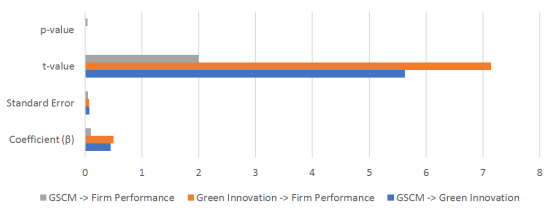
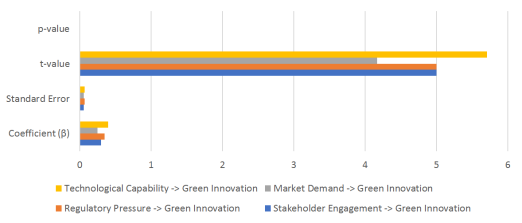
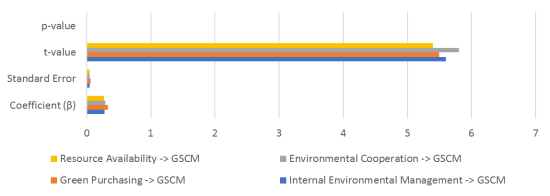
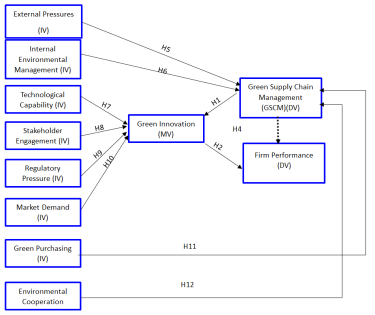
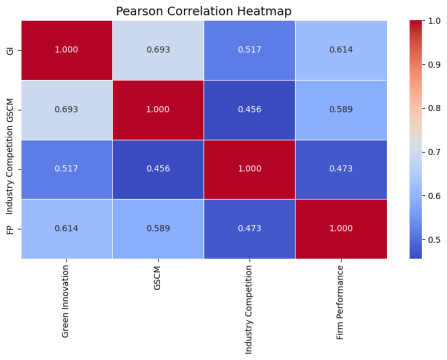
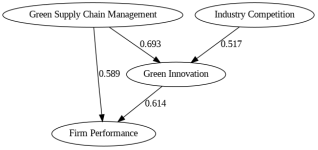
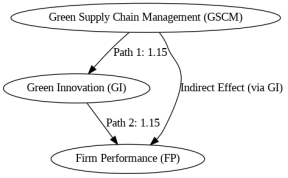




 Share This Article
 Twitter
 Linked In
 Facebook